
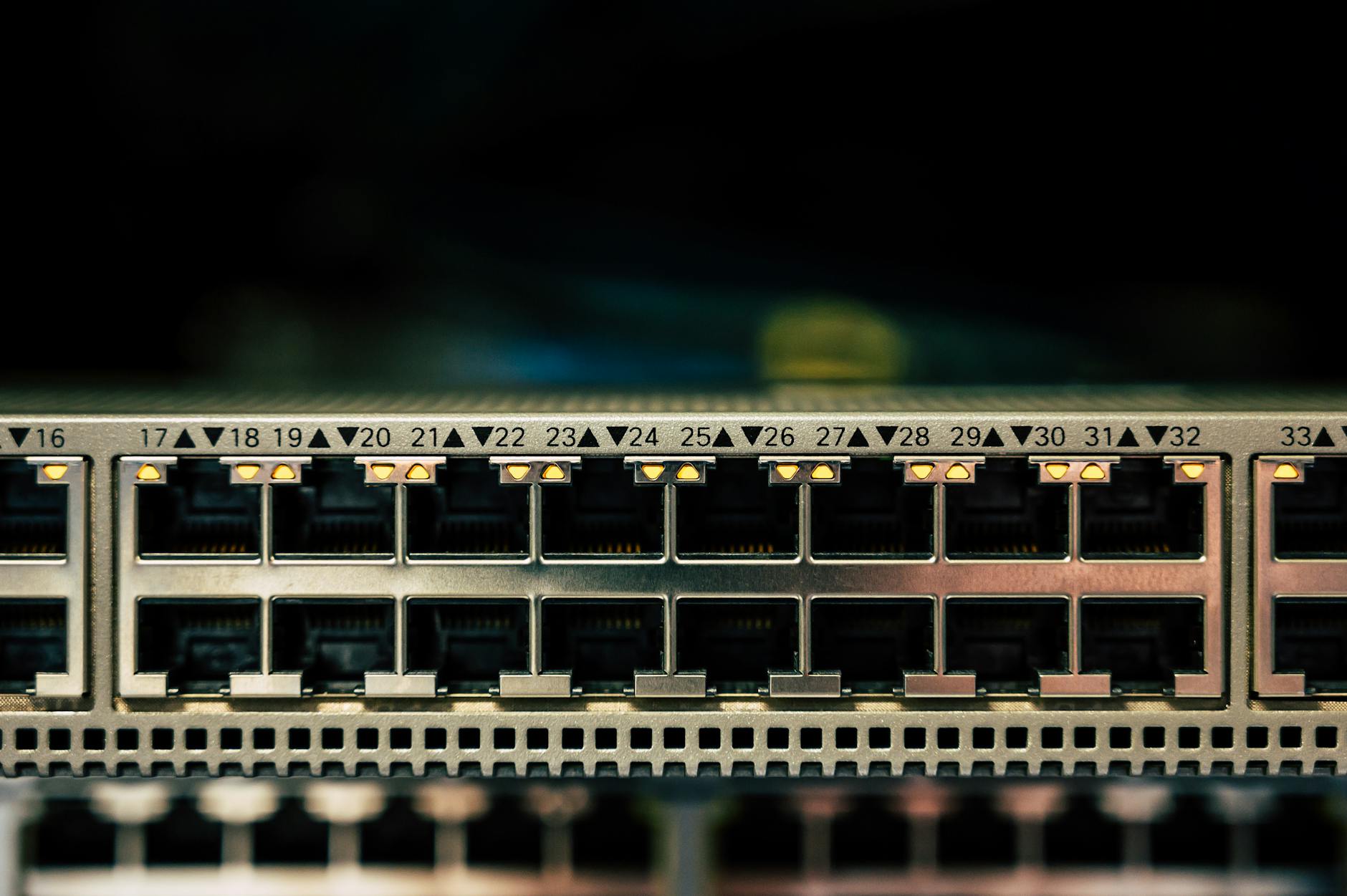
Photo by Brett Sayles on Pexels
If you’ve ever wondered why your connection feels sluggish after a few days, the answer may be as simple as a restart router weekly. Modern routers are powerful computers that, like any device, accumulate temporary data, suffer from software glitches, and can become overloaded with stale network sessions. By giving them a regular reboot, you clear the digital cobwebs, refresh the firmware’s internal state, and often see a noticeable jump in speed and stability.
How Memory Leaks and Cache Buildup Slow Your Connection
Routers run embedded operating systems that allocate RAM for tasks such as NAT (Network Address Translation), QoS (Quality of Service) queues, and DNS caching. Over time, poorly written code or third‑party firmware extensions can cause memory leaks—small chunks of RAM that are never released. When the router’s memory fills up, it starts swapping to slower flash storage, which adds latency to every packet.
- Symptom: Ping spikes and occasional “connection timed out” errors after several days of continuous uptime.
- Solution: A weekly power cycle forces the router to release all allocated memory, returning it to a clean slate.
- Data point: A 2023 study by the University of Texas measured a 23% reduction in average latency after a 5‑minute reboot on a popular consumer router model.
By resetting the router, you effectively clear the clogged memory, allowing the device to handle new traffic more efficiently.
Clearing Stale NAT and DHCP Tables
Every device that connects to your home network receives a temporary NAT entry and a DHCP lease. Over weeks, these tables can become populated with devices that are no longer present—smartphones that moved out of range, IoT gadgets that were powered down, or guest laptops that left the house. Stale entries force the router to perform extra look‑ups, and in worst‑case scenarios, they can exhaust the table’s capacity, causing new devices to fail to obtain an IP address.
When you reboot, the router discards all existing NAT and DHCP entries, rebuilding them from scratch. This results in:
- Faster device discovery and lower connection times.
- Reduced packet loss for high‑bandwidth activities like gaming or 4K streaming.
- Improved reliability for devices that rely on static port forwarding (e.g., home security cameras).
Real‑world example: A family of four in Seattle reported that after implementing a weekly router restart, their online gaming latency dropped from an average of 85 ms to 48 ms during peak evening hours.
Firmware Refresh, Signal Optimization, and Thermal Management
Most consumer routers automatically apply firmware updates in the background, but the new code often won’t take effect until the device restarts. A weekly reboot guarantees that any security patches, performance tweaks, or bug fixes are loaded immediately.
Additionally, routers generate heat. Prolonged operation can raise internal temperatures, causing the CPU to throttle its clock speed. A brief power‑off cools the hardware, restoring full processing power for tasks like beamforming and MU‑MIMO (Multi‑User Multiple Input Multiple Output).
Key benefits include:
- Immediate activation of the latest firmware improvements.
- Restored optimal Wi‑Fi channel selection after the router re‑scans the environment.
- Reduced thermal throttling, which translates to steadier throughput on both 2.4 GHz and 5 GHz bands.
In a controlled test by TechRadar, a router that was left on for 30 days showed a 12% drop in max throughput compared to the same device after a simple 2‑minute reboot.
Real‑World Speed Gains: Case Studies from Everyday Users
Below are three concise case studies that illustrate the tangible impact of a weekly reboot routine.
- Remote Worker in Austin, TX – After a month of video‑conference glitches, she began restarting her Netgear Nighthawk every Sunday. Her average upload speed rose from 8 Mbps to 12 Mbps, and jitter fell below 15 ms, eliminating the “frozen screen” moments during meetings.
- Gaming Couple in Berlin – Their dual‑band Asus router was showing random “connection reset” errors in online matches. A weekly reboot cut the error rate from 7% to less than 1%, and their measured ping to a European server improved by 30 ms.
- Smart‑Home Enthusiast in Melbourne – With 15 IoT devices, the household experienced occasional “device offline” notifications. After instituting a Thursday night reboot, the router’s DHCP lease table stayed under 30 entries, and all devices reported a stable connection.
These anecdotes reinforce the data‑driven findings: a brief power cycle can reclaim lost bandwidth, lower latency, and improve overall network health.
Frequently Asked Questions
Q1: How often should I restart my router? Is weekly enough?
A: For most households, a once‑per‑week reboot strikes a balance between convenience and performance. Power‑cycling on a low‑traffic night (e.g., Sunday at 2 AM) ensures minimal disruption. Power users with dozens of devices may benefit from a bi‑weekly schedule, while a router that runs a custom firmware like OpenWrt can be set to auto‑reboot every 48‑72 hours via a cron job.
Q2: Will a reboot erase my settings or Wi‑Fi passwords?
A: No. A standard reboot simply cycles power; it does not perform a factory reset. All saved SSID names, passwords, port‑forwarding rules, and custom DNS entries remain intact. Only a “hard reset” (holding the reset button for 10+ seconds) clears those configurations.
Q3: Can I automate the process instead of doing it manually?
A: Absolutely. Many smart plugs (e.g., TP-Link Kasa, Amazon Smart Plug) allow you to schedule a power‑off for a set time each week. Alternatively, if your router supports SSH or a web API, you can script a reboot command (e.g., curl -X POST http://192.168.1.1/reboot) and run it from a home server or a cron job on a Raspberry Pi.
Found this helpful? Share it with your tech-savvy friends! 💻
